
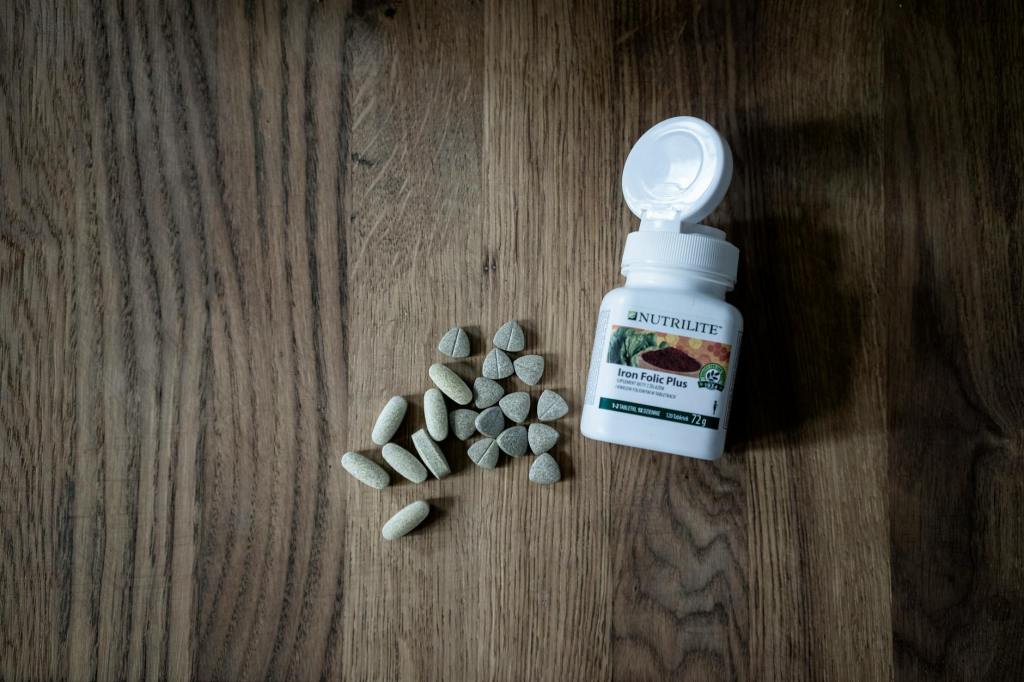
Folate is essential but Folic acid is not, and may be harming your health.
Folic acid is the manmade, synthetic version of Folate, vitamin B9. Folate is essential for many body processes, from assisting with DNA synthesis, to the production of red blood cells and more. Folate became famous in the 1960’s, as it became clear that a deficiency produced neural tube defects, a debilitating condition where the spine and spinal cord fail to close, leading to permanent physical and neurological complications (Spina Bifida).
Researchers discovered that Spina Bifida could easily be prevented through an increase in daily Folate, this led to our love affair with the synthetic Folic Acid (a lower form of Folate), and we began to enrich everything with Folic Acid (including most commonly multivitamins and all wheat products).
So if Folic Acid can help prevent birth defects, what’s the problem?
The issue is that Folic Acid is the least efficient form of Folate, and is particularly damaging for neurodivergent people (ASD, ADHD), people with gut issues, and anyone with MTHFR genetic mutations.
Folic Acid requires conversion in the liver to become Folate. The conversion of Folic Acid is a time-consuming and enzyme heavy process, frequently leading to an accumulation of Unmetabolized Folic Acid1 (UMFA). UMFA can accumulate in the blood and bodily tissues causing a cascade of problems, UMFA prevents natural killer cells from operating, destroying immune function, and increasing inflammation. UMFA carries an increased cancer risk2, and exacerbates pre-existing gut issues like IBS.
UMFA causes further problems in neurodivergent individuals3. Up to 60% of autistic people have folate receptor antibodies, these antibodies activate due to Folic Acid supplementation, blocking Folate receptors and preventing Folate from entering the brain despite normal serum Folate levels. This lack of Folate in the brain is particularly detrimental due to it’s behavioural effects. Remembering that wheat products are usually enriched with Folic Acid, it’s not difficult to see why neurodivergent people, particularly children, may suffer behavioural changes after eating them.
The bottom line:
Folate is an essential, protective compound. At appropriate doses, supplementation has fantastic benefits like the prevention of Spina Bifida. Folate supplementation in pregnant mothers has even been shown to lower rates of ASD in children4. This being said not all Folate supplements are equal, it is advisable to stay away from synthetic Folic acid and instead to supplement with Folinic Acid, a more natural form that is easily utilised by the body that bypasses the UMFA concern.
References:
- Fardous AM, Heydari AR. Uncovering the Hidden Dangers and Molecular Mechanisms of Excess Folate: A Narrative Review. Nutrients. 2023 Nov 6;15(21):4699. doi: 10.3390/nu15214699. PMID: 37960352; PMCID: PMC10648405.
- Bailey RL, Mills JL, Yetley EA, Gahche JJ, Pfeiffer CM, Dwyer JT, Dodd KW, Sempos CT, Betz JM, Picciano MF. Unmetabolized serum folic acid and its relation to folic acid intake from diet and supplements in a nationally representative sample of adults aged > or =60 y in the United States. Am J Clin Nutr. 2010 Aug;92(2):383-9. doi: 10.3945/ajcn.2010.29499. Epub 2010 Jun 23. PMID: 20573790; PMCID: PMC2904036.
- Hoxha B, Hoxha M, Domi E, Gervasoni J, Persichilli S, Malaj V, Zappacosta B. Folic Acid and Autism: A Systematic Review of the Current State of Knowledge. Cells. 2021 Aug 3;10(8):1976. doi: 10.3390/cells10081976. PMID: 34440744; PMCID: PMC8394938.
- Egorova, O., Myte, R., Schneede, J. et al. Maternal blood folate status during early pregnancy and occurrence of autism spectrum disorder in offspring: a study of 62 serum biomarkers. Molecular Autism 11, 7 (2020). https://doi.org/10.1186/s13229-020-0315-z
 Sorrel
Leave a comment